
AI Computerised Treadmill Gait Analysis Adelaide
Home to South Australia’s first AI computerised gait analysis treadmill
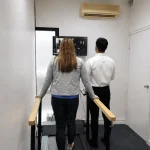
Adelaide Heel Pain Clinic is proud to be home to South Australia’s first AI computerised gait analysis treadmill. The treadmill is fitted with thousands of high-frequency pressure sensors and paired with AI-driven analysis software that captures exactly how your feet load, how your body moves, and where the imbalances are. For patients across Adelaide dealing with heel pain, Achilles problems and recurring running injuries. This is a level of detail you can’t get from watching someone walk down a hallway.
Why your gait matters
The way you walk and run has a direct effect on every joint and tendon from your feet to your lower back. Small alignment issues — that you can’t see and often can’t feel — quietly add up over thousands of steps a day. When you’re walking, your body absorbs up to three times your body weight with each foot strike. When you’re running, that figure climbs to ten times your body weight. Over time, even minor inefficiencies in your gait can lead to plantar fasciitis, Achilles tendinopathy and running injuries. Identifying these patterns early is one of the most effective things we can do to stop an injury from becoming chronic.
How the AI treadmill works
You walk or run on the treadmill at your normal pace while the embedded sensors capture every step. The AI software then processes thousands of data points in real time and produces a detailed report covering:
- Pressure distribution across each foot — where you load and where you don’t
- Force and impact at heel strike, midstance and toe-off
- Step length, stride timing and gait symmetry between left and right
- Centre of pressure and how it travels through your foot
- Stance phase timing and ground contact patterns
- Balance and weight shift during standing and walking
Because it’s AI-driven, the system flags patterns that are outside normal ranges automatically — including subtle asymmetries that are nearly impossible to spot with the naked eye. We pair this with a hands-on biomechanical assessment of your joint range, muscle strength and flexibility so the data is always interpreted in the context of you — your history, your goals and your symptoms.
What we use it for
The AI computerised gait analysis is central to how we diagnose and manage conditions including:
- Plantar fasciitis and heel pain
- Achilles tendinopathy
- Heel spurs
- Severs Disease (Children’s Heel Pain)
- Recurring running injuries
It’s also a powerful tool for gait retraining, return-to-run programming, orthotic prescription and footwear selection— because once we know exactly how your feet are loading, we can match the intervention to the problem rather than guessing.
What to expect in your appointment
After a discussion of your symptoms and goals, we’ll run you through the AI gait analysis on the treadmill — typically a short walking assessment, and for runners, a running capture once you’re warmed up. The recording itself only takes a minute or two; the broader biomechanical assessment runs around 40 to 60 minutes. We’ll explain what the data shows, what it means for your symptoms, and walk you through the treatment plan — which may include exercises, gait retraining cues, footwear advice, 3D laser scanned orthotics, shockwave therapy or other treatments depending on your diagnosis.
What to wear
Comfortable, active clothing — shorts or leggings and a t-shirt — along with the runners or walking shoes you wear most often. If you’re being assessed for a running injury, bring the shoes you actually run in. We may also ask you to walk or run barefoot for part of the assessment.
Frequenly Asked Questions
Is it really the first AI gait analysis treadmill in South Australia?
Yes. We’re the first clinic in South Australia to install this AI-enabled computerised gait analysis treadmill.
How long does the gait analysis take?
The treadmill recording itself takes only 30 seconds to a couple of minutes once you’re walking or running at a comfortable pace. The full biomechanical assessment, including a face-to-face discussion of results, runs around 40 to 60 minutes.
Can my GP perform a gait analysis?
No. Detailed gait analysis is performed by podiatrists with specific training in biomechanics and the use of computerised pressure-plate technology.
Do I have to be a runner to benefit?
Not at all. While runners get enormous value from the assessment, our patients also include walkers, hikers, older adults with balance concerns, people recovering from injury, and patients with persistent heel, knee or back pain who have never run a step.
Is the assessment claimable on private health?
Yes — the gait analysis is performed as part of a podiatry consultation, which is generally claimable under your podiatry extras cover, depending on your fund.

Book Online in less than 60 Seconds
Easily book an appointment at Adelaide Heel Pain Clinics in less than 60 seconds by selecting a location, practitioner, date and time from our online booking portal. Same day appointments are available.