“Mum, My Feet Hurt!”
 Is it just growing pains, or something more? Discover why active kids experience foot pain after sport and when sore heels could be a sign of Sever’s disease.
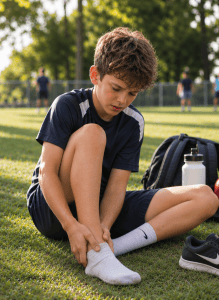
It’s something many parents hear after football training, a weekend netball game or a busy day running around at school.
At first, you might put it down to tired legs, new shoes or growing pains. But then it happens again. Your child starts limping after sport, asks to be carried or suddenly doesn’t want to join in the activities they usually love.
When foot pain keeps coming back, it helps to understand exactly where it hurts. If the pain is around the heel, one condition worth knowing about is Sever’s disease.
The reassuring part: Sever’s disease is a common cause of heel pain in growing children. It usually doesn’t cause lasting damage, and symptoms can often be managed while children continue to enjoy suitable activities.
Is It Growing Pains or Something Else?
It’s easy to assume sore feet are simply part of growing up. But recurring foot pain shouldn’t automatically be dismissed as growing pains. Where your child feels the pain matters, and pain around the heel can point to a more specific cause.
Sever’s disease, medically known as calcaneal apophysitis, occurs when the growth area at the back of the heel becomes irritated. It’s particularly common in children aged approximately 8 to 14, when rapid growth and physical activity can place additional stress on the developing heel.
Running, jumping and repeated impact can aggravate this sensitive area, especially during a growth spurt.
Image caption: Sever’s disease affects the growth plate at the back of the heel, where the Achilles tendon attaches nearby.
Signs Your Child’s Heel Pain Could Be Sever’s Disease
One of the most recognisable patterns is a child who runs around happily but complains about sore heels afterwards. Sometimes the pain begins during training; other times, it appears when they get home.
1. Heel discomfort
Pain at the back or underneath the heel, sometimes in both feet.
2. Changed walking
Limping or walking on tiptoes to avoid pressure on the heel.
3. Sport-related pain
Symptoms that worsen during or after running and jumping.
4. Recurring symptoms
Discomfort that eases with rest but returns when activity resumes.
Not every child with heel pain has Sever’s disease. Other conditions can cause similar symptoms, so persistent pain deserves a proper assessment.
Why Does My Child’s Heel Hurt More After Sport?
Think about how much activity a growing child can fit into one week: school sport, lunchtime running, football training, weekend games and perhaps another activity in between.
Now add a growth spurt. The developing heel can become sensitive to repeated loading, especially when activity increases faster than the body can comfortably adapt.
This doesn’t mean sport is bad for growing feet. It means activity, recovery and footwear may need adjusting while the heel is sensitive.
For children with Sever’s disease, the aim is generally to manage symptoms and support a gradual return to comfortable activity, rather than unnecessarily stopping all exercise.
What About Flat Feet and Wobbly Ankles?
Perhaps your child’s feet look unusually flat, their ankles seem to roll inwards, or their shoes wear unevenly. It’s understandable to wonder whether these changes are contributing to discomfort.
Flat feet are common in children and aren’t automatically a problem. Many children have flexible flat feet without pain or any need for treatment.
What a podiatrist can assess
At our Adelaide podiatry clinics, our podiatrists can look at how your child walks and runs, review footwear and assess whether foot function may be contributing to their symptoms.
Recommendations depend on the findings, rather than foot shape alone.
How Is Sever’s Disease Treated?
As explained by the Better Health Channel, Sever’s disease generally settles as the heel growth plate matures. But that doesn’t mean your child needs to put up with recurring pain in the meantime.
Treatment focuses on reducing irritation, managing activity and keeping your child as active as comfortably possible.
Adjust activity during flare-ups
Temporarily reduce painful running and jumping, particularly if your child is limping.
Review shoes and heel cushioning
Supportive footwear, heel cups or heel raises may help some children feel more comfortable.
Build strength and mobility
Appropriate exercises may be recommended based on symptoms and assessment findings.
Return to sport gradually
Increase activity as comfort and tolerance improve, rather than rushing straight back to full training.
Can Custom Orthotics Help Children With Sever’s Disease?
When your child is experiencing recurring heel pain, finding ways to keep them comfortable and active becomes a priority.
Custom orthotics can be a helpful treatment option for children with Sever’s disease, particularly when additional foot support or pressure redistribution may help reduce discomfort during walking, running and sport.
Unlike standard shoe inserts, custom orthotics are designed around your child’s individual foot shape and needs. They may help improve comfort, provide targeted support and reduce stress on sensitive areas of the heel.
At Adelaide Heel Pain Clinic, our podiatrists assess your child’s foot structure, walking patterns and symptoms to determine whether custom orthotics could be beneficial.
Our goal is to help growing feet feel more comfortable, so children can get back to enjoying the activities they love.
Image caption: Custom orthotics can be designed to fit a child’s footwear and individual support needs.
Should My Child Stop Playing Sport?
Not automatically. Your child loves their sport, their teammates and the freedom of being active. The amount they can continue depends on how painful the heel is.
If they’re limping, experiencing significant pain or struggling to walk comfortably, reducing high-impact activity is important. With milder symptoms, modified participation may be possible.
Lower-impact activities such as swimming or cycling can sometimes help children remain active while symptoms settle.
How Long Does Sever’s Disease Take to Heal?
There isn’t one timeline for every child. Some improve within weeks of adjusting their activity and footwear. Others experience symptoms that come and go during growth spurts or busy sporting periods.
Because the heel growth plate remains active for several years, flare-ups can return before it matures. However, this doesn’t mean your child should experience constant pain throughout those years.
Sever’s disease generally resolves as the growth plate finishes developing and rarely causes long-term problems.
When Should You See a Podiatrist?
Recurring foot pain is worth investigating, especially if your child starts changing how they walk, avoids running or repeatedly complains after sport. Pain centred around the heel may have a different cause from pain in the arch or forefoot.
At Adelaide Heel Pain Clinic, our podiatrists assess children’s heel pain, gait and footwear to help identify the likely cause and discuss suitable management options.
When to seek prompt medical attention
If your child cannot bear weight, develops severe pain after an injury, has significant swelling or redness, or experiences fever alongside foot pain, seek prompt medical assessment.
“Mum, My Feet Hurt” Shouldn’t Become the New Normal.
Children deserve to run, jump and enjoy being active. If your child is regularly complaining about sore feet after sport, particularly pain around the heels, our podiatrists can help you understand what may be causing the discomfort and what to do next.
Book a Children’s Heel Pain Assessment
Assessment and treatment recommendations are tailored to each child. Results vary.
For further reading: Better Health Channel (Victoria): Sever’s disease. Our online booking page is available if you would like to arrange an assessment.
